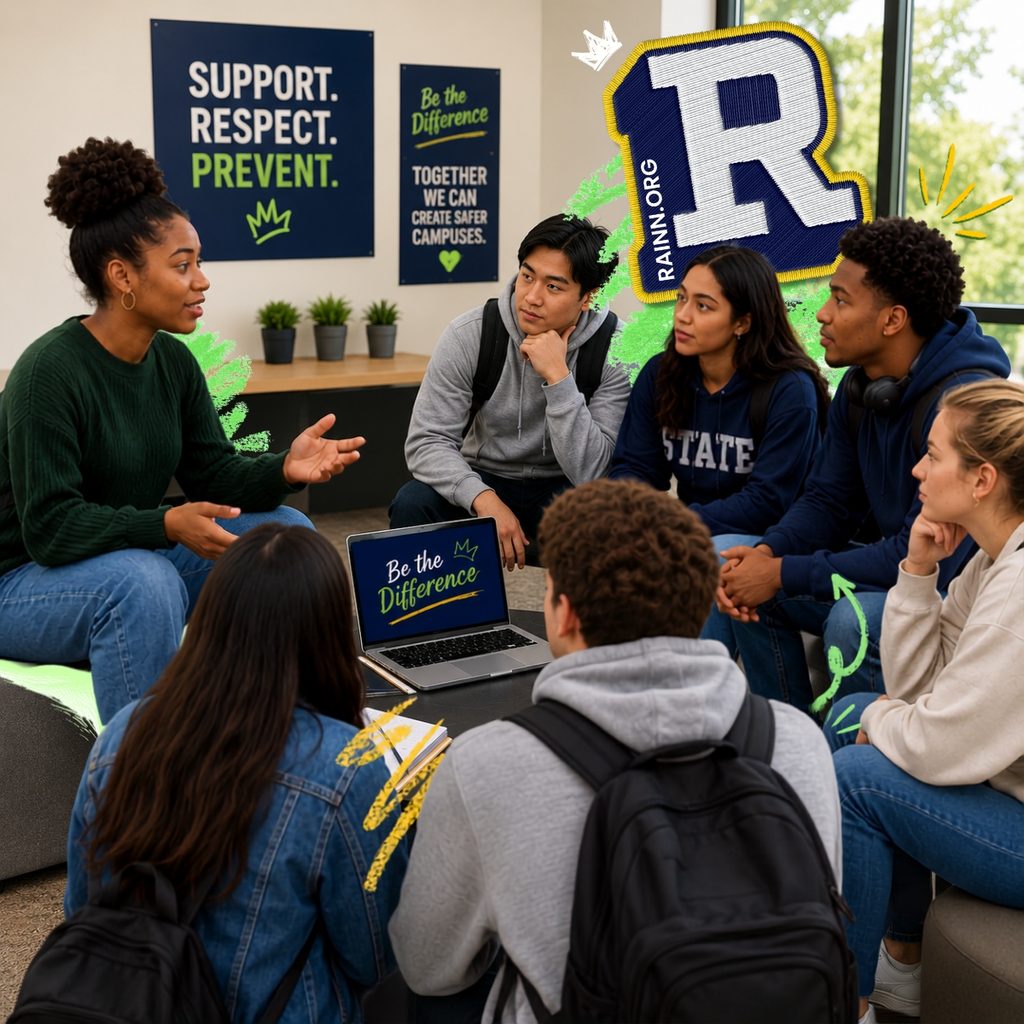
Sexual Violence Is Not an Inevitable Part of College
Sexual violence affects students at colleges across the country—but together, we can change that.
Campus Sexual Violence
1 in 8 students experiences sexual violence during college.
The 2019 Campus Climate Survey found that 13% of undergraduate students experienced rape or sexual assault after enrolling in college.
That’s about:
• 1 in 4 undergrad women (26%)
• 1 in 14 undergrad men (7%)
who experienced nonconsensual sexual contact by physical force or inability to consent since enrolling at their school.
Campus prevention must begin early, continue consistently, and reach students where they live, study, socialize, and seek support.
See More Facts & StatisticsThose numbers tell us something important: prevention cannot be limited to one orientation session, one awareness month, or one group of students.
It has to become part of everyday campus life.
Prevention is not the same as telling students how to avoid being assaulted.
No one is responsible for preventing someone else from choosing to cause harm.
Prevention means:
- Teaching consent
- Challenging harmful attitudes and beliefs
- Giving people tools to step in
- Supporting survivors
- Creating systems that hold people accountable
See the Statistics on Campus Sexual Violence
Explore the latest research and learn how data can strengthen prevention, justice, and healing.
What Sexual Violence Can Look Like in College
Sexual violence is broader than many people realize.
It may include:
- Rape or attempted rape
- Unwanted sexual touching
- Sexual coercion or pressure
- Drug-facilitated sexual assault
- Sexual harassment
- Tech-enabled sexual abuse, including sharing intimate images without consent
- Stalking or abuse within a dating relationship
- Any sexual activity when someone cannot consent
A person does not need to physically fight back or say the word “no” for an experience to be sexual violence.
Consent requires clear, voluntary, ongoing agreement.
Prevention Starts Before Something Happens
Effective prevention asks more than, “How can students stay safe?”
It asks:
- What are we teaching?
- What behavior are we challenging?
- What do we do when someone crosses a line?
- How prepared are our schools to respond?
A useful way to think about prevention is:
Teach
Teach students what consent, healthy relationships, boundaries, and respectful communication actually look like.
Prevention education should give people practical skills they can use, not just rules to memorize.
Challenge
Challenge harmful attitudes and beliefs that excuse harassment, coercion, objectification, or sexual violence.
Friends, teammates, classmates, student organizations, coaches, and campus leaders all help shape what behavior a community accepts.
Change
Change environments where harmful behavior is overlooked.
Make prevention visible. Make survivor resources easy to find. Train people to recognize concerning situations and know how to respond.
Strengthen
Strengthen policies, reporting options, survivor support, and accountability.
Policies cannot protect students if people do not understand them or institutions fail to follow through.
Know What Consent Looks Like
Consent is communication.
A person’s clothing, flirting, dating history, previous sexual activity, silence, or decision to go home with someone does not equal consent.
Consent should be:
- Freely given. No pressure, threats, manipulation, or coercion.
- Informed. Everyone understands what they are agreeing to.
- Clear. Do not guess.
- Ongoing. Anyone can change their mind at any time.
Alcohol and drugs can affect a person’s ability to make informed decisions. Someone who is asleep, unconscious, or too impaired to understand what is happening cannot consent.
When you’re unsure, stop and check in.
Know How To Step In Safely
You do not have to confront someone or put yourself in danger to help.
RAINN’s C.A.R.E. approach gives you four options:
C: Create a Distraction
Interrupt the situation. Ask a question, start a conversation, or create a reason for someone to leave.
A: Ask Directly
Check in privately: “Are you OK?” or “Do you want to get out of here?”
R: Rally Others
Ask friends, staff, security, a resident adviser, or someone else who can help.
E: Extend Support
If something has already happened, stay present. Listen. Ask what the person needs.
Learn To Step In With C.A.R.E.
Safer Strategies Can Give You More Options
No safety strategy can guarantee that sexual violence will not happen.
If someone harms you, responsibility belongs to the person who chose to cause the harm—it’s never about what you wore, drank, or posted, where you went, or which precautions you did or didn’t take.
Still, some strategies can help students feel more prepared.
When You’re Going Out
- Check in with friends before, during, and after parties or events.
- Know how you plan to get home.
- Keep track of your drink and know what you are consuming.
- Pay attention if a friend suddenly seems much more intoxicated than expected.
- If something feels wrong, help one another leave or get support.
Online
- Think before sharing your location or personal information publicly.
- Check your privacy and location-sharing settings.
- Save the evidence if someone threatens, harasses, impersonates, or sexually exploits you online.
- Tell someone you trust if someone’s behavior online makes you feel threatened or unsafe.
These strategies are options, not obligations. A survivor is never responsible for another person’s abusive behavior.
Know Your Campus Resources Before You Need Them
Finding information during a crisis can feel overwhelming.
Take a few minutes to identify your school’s:
- Title IX coordinator or office
- Confidential survivor advocate, if available
- Student health center
- Mental health services
- Campus safety resources
- Housing or academic-support options
- Local sexual assault service provider
Save the information somewhere easy to find.
You may never need it—but someone you care about might.
What About the College “Red Zone”?
You may hear the beginning of the academic year called the “red zone,” a period when some students face heightened sexual-violence risk.
The first year deserves focused prevention, but sexual violence does not stop after freshman year—or when the fall semester ends.
Prevention should continue throughout the college experience.

Take Action on Your Campus
Together, we can put an end to the high-risk “red zone” and create safer campuses.
Know Your Rights Under Title IX
Title IX is a federal civil rights law that prohibits sex discrimination in education programs and activities that receive federal funding.
Sexual harassment and sexual violence may fall under Title IX.
If sexual violence affects your education, your school may be able to offer options related to academics, housing, safety, or other parts of campus life.
You do not have to become an expert on Title IX before asking what options are available.
If Someone Tells You They Experienced Sexual Violence
You do not need perfect words.
Remember the T.A.L.K. acronyn:
T: Thank Them
“Thank you for telling me.”
A: Ask How You Can Help
Let the survivor tell you what would feel helpful.
L: Listen Without Judgment
Avoid blame, interrogation, or questions about why they responded a certain way.
K: Keep Supporting Them
Do not disappear after the first conversation.
For adult survivors, respect their choices about reporting, medical care, counseling, or other next steps.
Learn How To T.A.L.K. With Survivors
If Something Happened to You
Whatever happened, you deserve support.
You can decide what comes next.
Some survivors want medical care. Some want to report. Some want information. Some want to talk with someone. Some need time before deciding anything.
There is no single right path.
Creating Safer Campuses Takes All of Us
Students should not have to spend college constantly calculating how to avoid sexual violence.
We can build something better.
We can teach consent. Challenge harmful attitudes and beliefs. Step in safely. Listen to survivors. Strengthen campus response. And hold people accountable when they cause harm.
Everyone has a role. No survivor carries the responsibility alone.
5 Conversations to Have Before College Move-In Day
A RAINN guide for parents and families sending a student to college.
If you or someone you know has experienced sexual assault, you are not alone. RAINN’s National Sexual Assault Hotline offers free, confidential, 24/7 support in English and en Español.
Call 800.656.HOPE (4673)
Chat at RAINN.org/hotline
Text “HOPE” to 64673
Join Our Community
Join the Fight for a World Free from Sexual Violence
Sign up for inspiring stories, important updates from RAINN, and tools to take action in your community.